


Using the phase-averaged method the velocity data were divided
by the mean and turbulence components of the velocity.
Figure 12 shows an example of phase-averaged time series of surface
elevation and turbulence components at 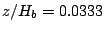 (above still water level) for Case 1.
The notation of
(above still water level) for Case 1.
The notation of  ,
,  and
and  are
turbulent stress for velocity components
are
turbulent stress for velocity components  .
Similar to the laboratory experiments by
Ting and Kirby (1994), Cox et al. (1994) and Cox and Shin (2003).
They showed that the temporal variation of
.
Similar to the laboratory experiments by
Ting and Kirby (1994), Cox et al. (1994) and Cox and Shin (2003).
They showed that the temporal variation of  in the surf zone
fluctuated in the range
in the surf zone
fluctuated in the range
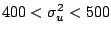
 .
Figure 12 shows that the magnitude of is similar at the
still water level
.
Figure 12 shows that the magnitude of is similar at the
still water level  but is large above the still water level.
The peak of turbulent stress is located at the front of crest and decreases linearly as time passes.
This is a typical time series of turbulence characteristics of this and
other laboratory experiments on depth-limited breaking waves.
but is large above the still water level.
The peak of turbulent stress is located at the front of crest and decreases linearly as time passes.
This is a typical time series of turbulence characteristics of this and
other laboratory experiments on depth-limited breaking waves.
![\includegraphics[width=12.0 cm]{figures/fig12.eps}](img117.png)
|
Figure 13 shows the horizontal relationship between time-averaged
void fraction:
 and time-averaged total kinetic energy (TKE):
  for Case 1-3.
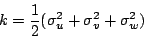
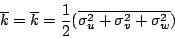
The total kinetic energy and time-averaged TKE are defined by
for Case 1-3.
The total kinetic energy and time-averaged TKE are defined by
and
time-averaged TKE: show similar tendency, although the peak of
appears
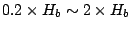 offshore than the peak of .
The short spatial lag between
and might be associated
with the entrapped air generated turbulence.
The spatial variations of the turbulence and void fraction are highly
correlated below
offshore than the peak of .
The short spatial lag between
and might be associated
with the entrapped air generated turbulence.
The spatial variations of the turbulence and void fraction are highly
correlated below  .
The entrained bulk of air and bubbles generate turbulence and turbulence
splits the coarse bubbles into fine bubbles in this phase.
Moreover, TKE and the void fraction increased ten times from
.
The entrained bulk of air and bubbles generate turbulence and turbulence
splits the coarse bubbles into fine bubbles in this phase.
Moreover, TKE and the void fraction increased ten times from
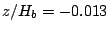 to
to  , thus two-phase flow characteristics is
remarkable near the wave crest.
In addition, there is significant difference between the turbulence and void fraction
, thus two-phase flow characteristics is
remarkable near the wave crest.
In addition, there is significant difference between the turbulence and void fraction  at in Case 1.
The void fraction at keeps high level after reached at its
peak but is decreased in this region.
This vertical level is re-aerated region of breaking wave induced bubble and is corresponds to silent-phase by Deane and Stokes classification.
Neglecting the short spatial lag between void fraction and TKE,
the direct comparison between time-averaged void fraction:
and normalized time-averaged TKE: of the all measuring locations is shown in Figure 14.
For small value
or , the relationship between them
shows high correlation and it becomes scattered at high void fraction or TKE region.
Overall, the relationship between time-averaged void fraction and time-averaged TKE is clear.
In addition, the incident wave dependence on the relationship between
and .
The similar analysis has been examined by Cox and Shin (2003) but their
results were more scattered than us.
This is based on the limitation of accurate turbulence measurements near
the wave crest.
The relation between the void fraction and TKE, the scale dependence of
void fraction and the further theoretical consideration will be required finding the universal relationship between the turbulence characteristics of breaking wave and void fraction.
at in Case 1.
The void fraction at keeps high level after reached at its
peak but is decreased in this region.
This vertical level is re-aerated region of breaking wave induced bubble and is corresponds to silent-phase by Deane and Stokes classification.
Neglecting the short spatial lag between void fraction and TKE,
the direct comparison between time-averaged void fraction:
and normalized time-averaged TKE: of the all measuring locations is shown in Figure 14.
For small value
or , the relationship between them
shows high correlation and it becomes scattered at high void fraction or TKE region.
Overall, the relationship between time-averaged void fraction and time-averaged TKE is clear.
In addition, the incident wave dependence on the relationship between
and .
The similar analysis has been examined by Cox and Shin (2003) but their
results were more scattered than us.
This is based on the limitation of accurate turbulence measurements near
the wave crest.
The relation between the void fraction and TKE, the scale dependence of
void fraction and the further theoretical consideration will be required finding the universal relationship between the turbulence characteristics of breaking wave and void fraction.
![\includegraphics[width=12.0 cm]{figures/fig13.eps}](img126.png)
|
![\includegraphics[width=10.0 cm]{figures/fig14.eps}](img127.png)
|
 and turbulence
components 1.0m from B.P. in Case 1. (a) Free surface
and turbulence
components 1.0m from B.P. in Case 1. (a) Free surface  (solid) and standard deviation
 , (b)-(d) temporal variation of
  (thick solid),
  (thin solid) and
  (dotted) and (e) the phase-averaged void fraction

 : Case 1,
  : Case 2,
  : Case 3)