


It is very difficult to check the theory developed in this paper.
The main difficulty is that the probability of maximum wave height
depends on both  and
and  .
It means that a huge amount of data including spectral information such
as the BF Index, and statistical parameters such as , etc are required
to verify the theory.
Unfortunately, from the present operational observations not all these
parameters have been obtained and archived.
Therefore, we will only try to check the dependence of the maximum
wave on qualitatively using the available field data set.
.
It means that a huge amount of data including spectral information such
as the BF Index, and statistical parameters such as , etc are required
to verify the theory.
Unfortunately, from the present operational observations not all these
parameters have been obtained and archived.
Therefore, we will only try to check the dependence of the maximum
wave on qualitatively using the available field data set.
The observed data was originally collected by the Tokyo Electric Power Company
using an ultra sonic wave gauge at a depth of 30m, off the coast of the
Pacific Ocean. The length of each record was 20min and the data were
collected every hour from March 1 to the end of June in 2001.
The wave statistics such as  ,
,  ,
,  , ,
, ,
 , and were operationally calculated and archived.
Note that the water depth of 30m is relatively shallow water.
Therefore, to eliminate shallow water effects3,
the data are excluded if the dimensionless water depth
, and were operationally calculated and archived.
Note that the water depth of 30m is relatively shallow water.
Therefore, to eliminate shallow water effects3,
the data are excluded if the dimensionless water depth  is less
than 2.0 (it corresponds to
is less
than 2.0 (it corresponds to  s). The total number of
valid data was about 2546.
s). The total number of
valid data was about 2546.
Figure ![[*]](crossref.png) shows the direct comparison between
shows the direct comparison between
 and .
The linear correlation between
and is only 0.73.
However, it is well known that
not only depends on
but also on .
Thus, the data are stratified according to and and
are compared with the theory.
Figure shows the direct comparison of the maximum wave height
distribution between observed data and theory for the
and .
The linear correlation between
and is only 0.73.
However, it is well known that
not only depends on
but also on .
Thus, the data are stratified according to and and
are compared with the theory.
Figure shows the direct comparison of the maximum wave height
distribution between observed data and theory for the  bin.
The histogram shows the observed PDF of the maximum wave height,
while the solid line and the dashed line indicate Eq.() and Rayleigh
theory, respectively. The number of wave records in each category is
indicated by the `sample' number. For fixed number of waves, the maximum
wave height distribution according to Rayleigh theory is constant, although
the observed data shows a clear dependence of the PDF on .
The peak of observed PDF is lower than Rayleigh theory for
bin.
The histogram shows the observed PDF of the maximum wave height,
while the solid line and the dashed line indicate Eq.() and Rayleigh
theory, respectively. The number of wave records in each category is
indicated by the `sample' number. For fixed number of waves, the maximum
wave height distribution according to Rayleigh theory is constant, although
the observed data shows a clear dependence of the PDF on .
The peak of observed PDF is lower than Rayleigh theory for 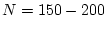 but becomes higher than Rayleigh theory for
  . The maximum wave
height distribution predicted by Eq.() qualitatively agrees with the
observed data, although it slightly underestimates.
. The maximum wave
height distribution predicted by Eq.() qualitatively agrees with the
observed data, although it slightly underestimates.
Next, we discuss the general behavior of the PDF of maximum wave height
in the nonlinear wave field, by showing the ensemble averaged
of each bin as a function of and in Figure .
The brackets  indicate the ensemble averaged value. Figure (a) is
observed data and (b) is the expected value of Eq.() through numerical
integration. The dependence of
on is weaker than
expected from Eq.().
This is because the length of observed time series was fixed to 20min,
so we cannot discuss the dependence of
on number of
waves in detail. On the other hand, the dependence of
indicate the ensemble averaged value. Figure (a) is
observed data and (b) is the expected value of Eq.() through numerical
integration. The dependence of
on is weaker than
expected from Eq.().
This is because the length of observed time series was fixed to 20min,
so we cannot discuss the dependence of
on number of
waves in detail. On the other hand, the dependence of
 on is clear.
The theoretically predicted
is
underestimated compared to the observed data but it agrees with the
observed data in a qualitative sense.
The observed
monotonically increases
for increasing , but for high values of kurtosis the theoretically
estimated value of
is lower.
on is clear.
The theoretically predicted
is
underestimated compared to the observed data but it agrees with the
observed data in a qualitative sense.
The observed
monotonically increases
for increasing , but for high values of kurtosis the theoretically
estimated value of
is lower.
Figure shows the comparison between observed data and theory of
freak wave occurrence frequency,  . To eliminate statistical
fluctuations, the observed data is excluded if the
number of samples is less than 20.
The observed clearly increases as is increased.
However, there is no clear dependence of on while according to
theory there should be.
The total number of wave trains is 2546 but this is still not sufficient to
examine the validity of theory completely. Hence, more data will be
required to verify the theory quantitatively.
. To eliminate statistical
fluctuations, the observed data is excluded if the
number of samples is less than 20.
The observed clearly increases as is increased.
However, there is no clear dependence of on while according to
theory there should be.
The total number of wave trains is 2546 but this is still not sufficient to
examine the validity of theory completely. Hence, more data will be
required to verify the theory quantitatively.