


In the previous section we have obtained for homogeneous random waves a clear relationship between spectral shape and kurtosis through the resonant and non-resonant four-wave interactions of the Zakharov equation. Following a central limit theorem, linear, dispersive random waves have a Gaussian PDF for the surface elevation. Finite amplitude effects result, however, in deviations from the Normal distribution, as measured by a finite skewness and kurtosis. () investigated the influence of second-order nonlinearity on wave crest distributions. However,for narrow band wave trains it will be shown that the wave height distribution only depends on the kurtosis. Therefore, we shall formulate the relationship between wave height distribution and kurtosis to examine analytically the effects of kurtosis on freak wave occurrence.
We assume that waves to be analyzed here are unidirectional with
narrow banded spectra and satisfy the stationary and ergodic hypothesis.
Let  be the sea surface elevation as a function of time
  and
and
 an auxiliary variable such that and
are not correlated.
Assuming both and are real zero-mean function with variance
an auxiliary variable such that and
are not correlated.
Assuming both and are real zero-mean function with variance  , we have
 is the envelope of the wave train and
  the phase.
() investigated the wave height distribution as a function
of kurtosis and skewness using the joint probability density function of
and for a narrow banded weakly nonlinear wave train.
We will follow this approach closely.
For weakly nonlinear waves deviations from the Normal distribution are
small. In those circumstances the PDF of the surface elevation
can be described by the Edgeworth distribution. As there is no-correlation
between and , the joint probability density function of
and becomes
the phase.
() investigated the wave height distribution as a function
of kurtosis and skewness using the joint probability density function of
and for a narrow banded weakly nonlinear wave train.
We will follow this approach closely.
For weakly nonlinear waves deviations from the Normal distribution are
small. In those circumstances the PDF of the surface elevation
can be described by the Edgeworth distribution. As there is no-correlation
between and , the joint probability density function of
and becomes
 is the
  th order Hermite polynomial
 (where
 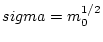 is the zero moment
of the wave spectrum) and have zero-mean.
is the zero moment
of the wave spectrum) and have zero-mean.
Keeping (![[*]](crossref.png) ) and () in mind, the PDF of the envelope
follows now immediately from an integration of the joint probability
distribution
) and () in mind, the PDF of the envelope
follows now immediately from an integration of the joint probability
distribution
, hence
it is found that the
first term of () gives the usual Rayleigh distribution
 , while the terms involving the skewness
  ,
etc, all integrate to zero because they are odd functions of .
The third term does give contributions and as a result we find
,
etc, all integrate to zero because they are odd functions of .
The third term does give contributions and as a result we find
 , a relation that can easily
be verified. Finally, using
, a relation that can easily
be verified. Finally, using
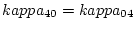 the final
result for the narrow-band approximation of the PDF of the envelope
becomes
) and (), the skewness is,
compared to the kurtosis, a large quantity. Quadratic terms in skewness
could give an equally important contribution to the PDF of as the
kurtosis terms. This was pointed out by () and it required
to extend the Edgeworth distribution to sixth order. Nevertheless,
this additional term, proportional to
the final
result for the narrow-band approximation of the PDF of the envelope
becomes
) and (), the skewness is,
compared to the kurtosis, a large quantity. Quadratic terms in skewness
could give an equally important contribution to the PDF of as the
kurtosis terms. This was pointed out by () and it required
to extend the Edgeworth distribution to sixth order. Nevertheless,
this additional term, proportional to  , gives for narrow-band wave
trains only a small contribution to the PDF for the same reason as the
bound wave contribution to the kurtosis may be neglected.
, gives for narrow-band wave
trains only a small contribution to the PDF for the same reason as the
bound wave contribution to the kurtosis may be neglected.
From the result () interesting consequences for the distribution of
maximum wave heights may be derived. In the narrow band approximation
wave height  equals
  and hence the wave height PDF becomes
 for wave height then follows from
an integration of () from to
for wave height then follows from
an integration of () from to  :
:


![$\displaystyle p(\eta,\zeta) =
\frac{1}{2\pi}\exp\left[-\frac{1}{2}(\eta^{2}+\zeta^{2})\right]$](img100.png)

![$\displaystyle \hspace{0.75cm}
+ \frac{1}{4!}\sum_{n=0}^{4}
\frac{4!}{(4-n)!n!}\kappa_{(4-n)n}
H_{4-n}(\eta)H_{n}(\zeta)
\Biggr]$](img102.png)


![$\displaystyle p(A)=A e^{-\frac{1}{2}A^2}
\left[1+\frac{1}{4}
\left(\kappa_{40} + \kappa_{22}\right)
\left(1-A^2+\frac{1}{8}A^4\right)
\right],$](img112.png)
![$\displaystyle p(A)=A e^{-\frac{1}{2}A^2}
\left[
1 + \frac{1}{3}\kappa_{40}\left(1-A^2+\frac{1}{8}A^4\right)
\right].$](img115.png)
![$\displaystyle p(H)=\frac{1}{4}H e^{-\frac{1}{8}H^2}\left[1+\kappa_{40}A_H(H)\right],$](img119.png)

![$\displaystyle P_H(H)=e^{-\frac{1}{8}H^2}\left[1+\kappa_{40}B_H(H)\right],$](img123.png)
