Accuracy and resolutions are the two main objectives in PIV. The
so-called recursive or super-resolution PIV is used to achieved the objectives. It is based on beginning with a relatively larger window (e.g., 128 128 or
6464 pixels) and ending with a smaller window (e.g., 3232 or
1616 pixels). Not only does the iterative process increase the spatial
resolution by decreasing the window size, it also shifts the corresponding
window in the second image [
128 or
6464 pixels) and ending with a smaller window (e.g., 3232 or
1616 pixels). Not only does the iterative process increase the spatial
resolution by decreasing the window size, it also shifts the corresponding
window in the second image [ in equations (1) and (2)] based on the
displacement calculated from previous iteration to obtain better correlation. The process therefore
increases the spatial resolutions with the increased number of vectors and
decreased size of window. A better-correlated result also means better
accuracy in the correlation process.
During the iterative process, spurious vectors are removed using median filter
(discussed later). The Kriging method is used to interpolate the removed error vectors from the previously obtained velocity field with a larger
window.
in equations (1) and (2)] based on the
displacement calculated from previous iteration to obtain better correlation. The process therefore
increases the spatial resolutions with the increased number of vectors and
decreased size of window. A better-correlated result also means better
accuracy in the correlation process.
During the iterative process, spurious vectors are removed using median filter
(discussed later). The Kriging method is used to interpolate the removed error vectors from the previously obtained velocity field with a larger
window.
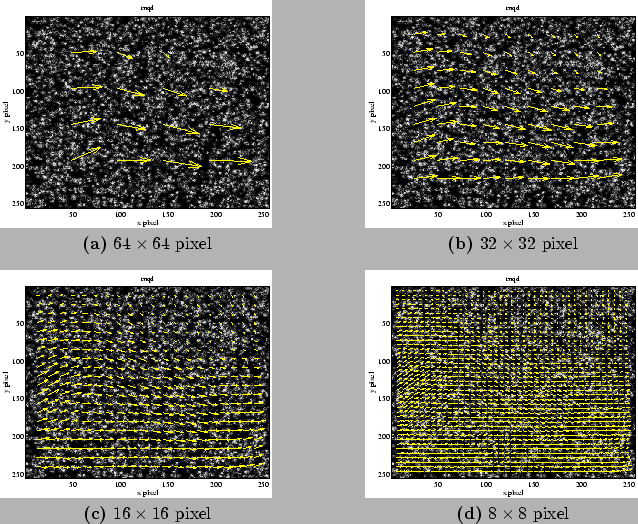
Figure 2 shows the estimated velocity vectors using the correlation algorithm (with the `cor' option) with the recursive process. The MATLAB commands are listed below:
>> im1 = imread('image1.bmp');
>> im2 = imread('image2.bmp');
>> [xi, yi, iu, iv] = mpiv(im1, im2, 64, 64, 0.5, 0.5, 20, 20, 1,'cor', 4, 1);
>> [iu_ft, iv_ft, iu_ip, iv_ip] = mpiv_filter(iu, iv, 2, 2.0, 3, 1);
The window size started from 6464 pixels and ended at 88
pixels.
Similar results can also be obtained if the MQD algorithm is
used (using the `mqd' option in mpiv).